Today's Kitsap Sun had a great article by Rachel Pritchett discussing the direction of Kitsap's troublesome home resale market. It was surprising, not because Pritchett did some fine journalism (as that is her baseline), but that the real estate professionals seemed to be telegraphing an ominous development in real estate.
While December’s numbers were encouraging, it’s too soon to say the market has bottomed out, said Mike Eliason, association executive of the Kitsap County Association of Realtors.I'd rather say "A" big issue... rather than "The" big issue... because there are scads of problems bearing down on real estate. Among these are: rapidly rising interest rates, discontinuance of government life support, rising unemployment, falling stock market, adverse demographic changes, and acceptance that "real estate can, AND DOES, fall in price."
“The big issue in the pond is the foreclosures,” he said.
Let's talk about foreclosures. On that score, Eliason probably doesn't know how correct he is.
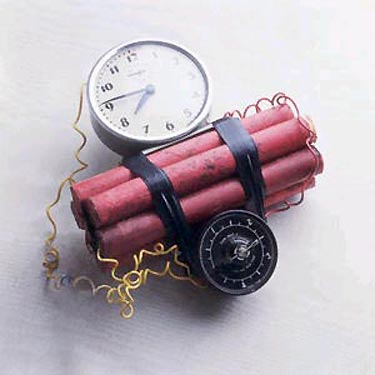
The Market Ticker , by Karl Denninger, is one of the best sources for the play-by-play of this horrific debt implosion we are all witnessing. Earlier this week, he noticed that the US Treasury is lobbing a financial nuke into this year's housing resale market.
Come the spring selling season you're going to see the inventory of homes that were "HAMPd" and failed for whatever reason hit the market.
This is not a trivial number of houses - there are close to 750,000 homes currently under trial modifications, and only a tiny number of them - something like 30,000 - have converted to permanent payment changes.
Thank Treasury for not telling you about this until the "selling season" had ended and we were in the middle of the winter months when sales are slow - and timing the "required start" date for April 1st, right into the maw of the spring selling season.
If you need to sell your house in the next year this is something you need to take into consideration. A flood of nearly 3/4 of a million houses appear poised to hit the market as short sales and "deed in lieu" sales beginning in April.
It appears that the US Treasury is going to do something prudent, which is to force the market to clean up this mess, and not allow "extend and pretend" programs to continue as institutionalized denial.
The resale market is likely to get hit with an avalanche of low priced sales, which will overwhelm the bid and crush prices. This doesn't include houses that were not subject to HAMP, but are distressed nonetheless.
Rumors are floating around that Bank of America will push 600,000 foreclosures into the market in 2010, up from 100,000 in 2009. I guess they saw that Treasury release. You can bet if BoA is going to disgorge 6X what they did in 2009, other banks will as well.
Remember from ECON 101 - Supply isn't just the number of units for sale, but the eagerness of the owners of those units to sell at the current market price. He who sells first, sells best. Put another way, "sell now, or be locked in forever."
If you bought a home in the past few months thinking you were really getting a good deal because rates were low, prices are "at the bottom," and you got $8000 of free government cheese, you are going to realize how expensive that $8000 cup of financial hemlock was when you find the homes in your neighborhood are dropping 20% below your price in very short order.
Eliason continues:
Eliason said bankers are warning his organization that the number of foreclosures and short sales is expected to grow locally in 2010 and 2011, working against a market that otherwise is attempting to recover.
Eliason estimates that 25 percent of homes selling now have been foreclosed on, are short sales, or are selling for less that what was owed on them.
 Yup. Looks like Eliason got the memo. Remember, our market is one of the "healthiest" in the nation, which is to say we are in the last car on the roller coaster. Those 25% are with all the government backstops, and enormous financial engineering being done at the Federal Reserve, and being the "last car on the roller coaster." The backstops are going to end when interest rates rise and the US Treasury can't roll its debt. The Institute For Economic Reality is predicting rising rates as money comes into short supply and deflation sinks its talons into the flesh of the productive economy.
Here is a thought experiment: ask yourself how many of your acquaintances are holding their homes off the market until housing recovers? What is the ratio of that number to those you know equally well that are facing forced foreclosure or distressed sales? Extrapolate from the 25% that Eliason is quoting and see what is really out there UNDER CURRENT CONDITIONS.
Now expand that with local unemployment rising another 5-8% and home mortgage rates pushing 7% for short term loans, or 9% for 30yr fixed?
“Yes, it will still pull down the prices because of the appraisal problem,” agreed Heather Holmen, an agent with Windermere Real Estate of Silverdale. She explained that a homeowner who wants to sell will have to adjust the asking price based on homes that have recently sold in the neighborhood, which likely includes distressed properties with low prices.
Appraisals are the least of our problems. Sure, the outright fraud that was foisted upon us during the go-go years is over, with Realtors and lenders no longer being able to twist arms to get appraisers to "hit the number," but the real problem with prices will not be in the appraisal. It will be in the inability of people to find the money to pay. Appraisals will trail the market as prices will continue to fall due to lack of liquidity. Remember, appraisals are a lagging indicator. They tell you what HAS happened, not what IS happening or WILL happen.
Holmen continues:
Holmen is among many local professionals who believe that continuing tax credits and low-but-rising interest rates will help the market hobble along this year, especially for homes in the $200,000 range in Silverdale and East Bremerton, the most active segment of the market.Delusional. The tax credits are not indefinite and only go through the end of April. The Congress is in the process of foisting upon us the largest tax hike in our history, which will certainly weigh on our ability to scrounge up money to buy Bainbridgeislanddreamhomes. However, the most glaring evidence that Holmen is under the influence of "hopium" is that "low but rising interest rates will help the market hobble along this year."“We’ve actually had some multiple offers,” she said.
She expects interest rates to approach 6 percent by mid-year.
 Excuse me? How do interest rates rising off a low base "help" home prices? I'd like for Holman to chime in, with her HP 12C in hand, and 'splain that to me. I realize that I went to Port Orchard schools, but the math on that is elusive.
If the county median home price is in the low-mid $200K range, and the most active $200K range is slightly below the median, that screams two likely possibilities: first time buyers are using the free government cheese and VHA backstop to buy homes they can't afford, or that flippers are descending on homes in that range. Rising rates will scare off the flippers like soap scares off hippies. Without flippers, or first time buyers, those foreclosures and distress sales are going to have an increasingly difficult time finding suitors.
Holmen continues:
It may take up to a decade, she said, for the market to genuinely return to normal, when homeowners can expect a modest-but-steady 3 percent to 5 percent annual rise in home values.Source? Why a decade? Why would homeowners expect 3-5% What drives that return? (something must) I'd like to see the basis for such a fanciful prediction.
Additionally, I'd like for someone from the NAR to clarify what "normal" means. Was 2006 normal? I hardly think an unending torrent of brain-dead Californians armed with truck loads of money that was borrowed into existence against the self-delusional hope of ever rising home prices is "normal."
Holmen starts to find reality:
Even then, the days of easy home loans are gone forever, she said, and consumers need to be ready.This is undoubtedly true (at least for our lifetime). If easy loans are a thing of the past (thank God), then home prices are about to revert to a very short orbit around declining disposable incomes. Consumers are not the ones that need to be ready - homeowners need to be ready. Their home isn't going to recover anywhere near the 2007 peak. That is not an opinion. That is a mathematical fact every bit as valid as AxA+BxB=CxC.
“People are going to have to get used to the fact that it’s not going to be as easy to get a loan,” she said.
Banks will take longer to check out prospective borrowers. Would-be homeowners will have to clean up their credit and do away with multiple loans on boats and RV’s, for example.I guess lending based upon the premise of being paid back with good collateral as a backing will replace the 20 year old paradigm of lending against anticipated future appreciation and refinancing. Yup, that will leave a mark. Loan officers are going to actually have to do homework and learn to say "no." They will no longer be able to securitize their ineptness and greed.
In the go-go years, you borrowed more on your home to finance your his/her Sea-Doo, Disney Cruise and Whistler weekends. Soon, those boondoggles will cost you the ability to buy a house. Ironic, isn't it? Imagine the stories you can tell your grand kids.
Grandpa: "Well, back at the turn of the century, we used to borrow money against our house to buy lifestyle toys and bling without ever having to worry about paying it back."Here is the money quote (no pun intended)
Grand kid: "That's insane! Are all old people as dumb as you? Is that why I'm in debt beyond my comprehension and our standard of living hasn't improved in 40 years?"
This is going to be the killer for home prices. If we are paying down debt, and our debt service is pretty close to our disposable income, there simply won't be any savings worth mentioning. There can't be in that scenario. If banks won't lend without a substantial down payment, and the lunatic practice of borrowing the down payment, or buying PMI (an even dumber idea), is a relic of a fool-laden era, how do you get rising home prices?And most of all, homeowners from now on will have to plan for a down payment, she said.
You don't.
 If banks settle on 20% down (and we would be lucky if they stopped there), you can borrow 4x your savings. Think about this. How many people have, as liquid and disposable assets, $40K? Seriously, how many people do you know that could have 400 Ben Franklins in their hands by the end of the week? We are not discussing lines of credit, but actual cash they have saved over the years. Not many, and those that can are likely living in the upper tier of real estate in Kitsap County. Under this metric, that upper tier is worth $200K, provided you can get the loan and are content to blow your entire life's savings on your down payment.
Good luck with that.
How about $25K? That pencils out to $125K house.
What do you think a "first time" home owner has as savings? Let's review: these people need to get $8000 from Obama's Stash and VHA loan to buy their home. They don't have squat. If they have $10K in real cash savings, I'd be surprised.
Think about this some more. Every house in Kitsap County would necessarily be valued at 5X the cash savings of the occupant (on average), and that presupposes they can service the debt on 4X their savings with no reserves of any kind.
There is no recovery coming in housing. Prices are going to continue to fall until debt burdens are relieved such that disposable incomes can rise to create savings and enough to service debt at 2-3X income. That's an awfully tall order if we consider where we are in this cycle and the FACT the government remedies for all of this have just piled on even more debt in a failed attempt to prevent the market from clearing.
It actually breaks my heart to see so many friends and family continue to buy into the insane notion that you have to own a home at these prices. Many have had the great fortune of being able to sell their homes in this environment, only to blow it by rushing in to buy something else.
The people that have bought in the past few months are going to be very P-Oed. 2010 is going to be a year people won't soon forget.

I still hold to my prediction of "20 cents on the dollar by 2010." I have 359 days left on that, and it is going to be tight, but I still like my chances.

